

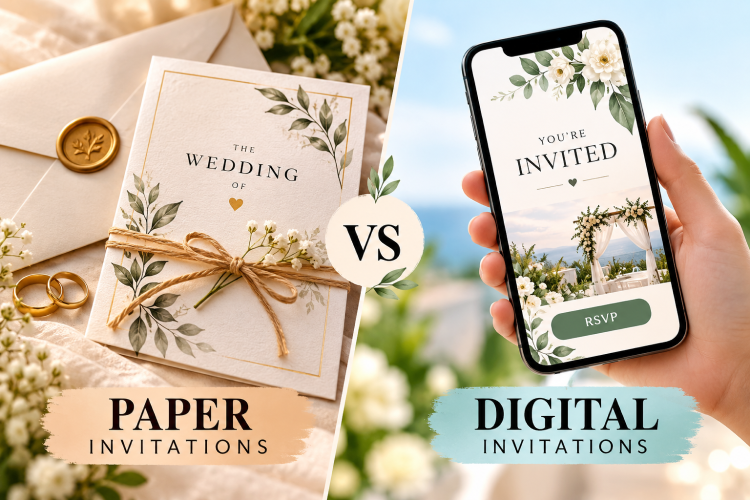
Paper or digital—which wedding invitation actually makes more sense today? For most modern couples, the answer depends on what matters most. Paper invitations offer charm, tradition, and keepsake value. Digital invitations provide speed, lower costs, easy updates, and simple RSVP tracking. A hybrid approach can give you the best of both.
💌 Paper Or Digital: What Should You Choose?
Your wedding invitation does more than share event details. It gives guests their first glimpse of your wedding style. Paper feels personal and traditional, while digital feels convenient and flexible. Neither option is automatically right for every couple. Your guest list, budget, wedding style, and planning needs should guide the decision.
Think about how your guests usually communicate. Some relatives may treasure a printed invitation on the refrigerator. Younger guests may prefer tapping a link and confirming their attendance. For destination weddings, digital invitations can also remove many practical headaches. The goal is simple: make your invitation beautiful and easy to use.
| Factor | Paper Invitations | Digital Invitations |
| Cost | Higher | Lower |
| Delivery | Mail required | Instant |
| RSVP tracking | Often manual | Usually automatic |
| Updates | Difficult | Easy |
| Keepsake value | High | Limited |
✨ Why Paper Invitations Still Feel Special
There is something memorable about opening a beautifully designed envelope. You can feel the paper, see the printing, and experience the design before reading the details. A carefully created wedding invitation suite can become part of your wedding memories. For formal weddings, paper can also create a strong sense of occasion.
Paper invitations also work well for older relatives who may not use email or wedding websites often. They can display the invitation at home and refer to it whenever needed. Photography is another advantage because printed invitations can appear in engagement and wedding detail photos. If stationery is important to you, this physical experience may be worth the added expense.
💰 The Real Cost Of Paper Invitations
Printed wedding invitations can cost more than couples first expect. You may pay for design, paper, printing, envelopes, envelope liners, postage, RSVP cards, and extra copies. Specialty finishes can raise the price even further. A beautiful invitation suite can quickly become a meaningful part of your stationery budget.
There is also a time commitment. You need to approve designs, check addresses, assemble envelopes, add postage, and visit the mailbox. Mistakes become harder to fix after invitations are mailed. If your venue or wedding details change, updating every guest can become stressful. Paper is beautiful, but it requires more planning.
📱 Why Digital Invitations Are So Practical
Digital wedding invitations solve many everyday planning problems. You can send them within minutes instead of waiting for printing and delivery. Guests can open them on their phones, view your wedding website, and RSVP online. That convenience can save both time and money.
Digital invitations are especially useful for large or spread-out guest lists. They can work well when guests live across different states or countries. You can also include maps, hotel information, dress codes, schedules, and registry details without filling an envelope. Some platforms even offer animated invitations that add movement and personality.
🔄 Easy Updates Can Save Your Sanity
Wedding plans sometimes change. A ceremony time may shift, a venue detail may need correction, or additional travel information may become available. With paper invitations, fixing these changes can require another message or printed insert. Digital invitations can usually be updated much faster.
This flexibility is one of the biggest differences between the two options. You can keep your wedding website current throughout the planning process. Guests always have one place to find the latest information. For busy couples, fewer logistical tasks can make digital invitations especially appealing.
📊 RSVP Tracking Makes A Big Difference
RSVP management is often where digital invitations shine. Instead of sorting returned cards, you can collect responses online. Many wedding platforms place guest responses into a single dashboard. This can make meal choices, attendance numbers, and guest communication easier to organize.
Paper RSVPs can still feel charming and traditional. However, they may require manual tracking and follow-up messages. Digital RSVPs reduce some of that work. For example, your online form might ask guests to confirm:
- Attendance status
- Meal preference
- Plus-one details
- Dietary restrictions
- Song requests
- Travel information
| RSVP Feature | Paper RSVP | Digital RSVP |
| Guest response | Mailed card | Online form |
| Tracking | Manual | Dashboard |
| Follow-ups | Often manual | Easier to manage |
| Meal choices | Manual entry | Digital collection |
| Response updates | Less convenient | Usually easier |
🎨 Digital Does Not Have To Look Cheap
Some couples avoid digital invitations because they imagine basic templates and generic designs. That does not have to be the case. Modern digital wedding invitations can use elegant typography, custom illustrations, animation, photographs, and coordinated colors. Your digital invitation should still feel like your wedding.
Avoid choosing a design simply because it is free. Look for a layout that matches your ceremony and reception style. Make sure the text remains easy to read on a small screen. Test the invitation on several phones before sending it to your guest list. A polished digital invitation can feel intentional rather than impersonal.
📲 Make The Mobile Experience Effortless
Most guests will probably open a digital invitation from their phone. That makes mobile design extremely important. Tiny text, confusing buttons, slow-loading pages, or complicated forms can quickly frustrate guests. Your invitation should work smoothly without requiring technical knowledge.
Keep the RSVP process short. Ideally, guests should understand where to click almost immediately. A simple RSVP experience can be more valuable than an elaborate animation. Before sending the invitation, ask a friend to test the entire process from their phone.
A strong digital invitation should include:
- Couple’s names
- Wedding date
- Ceremony time
- Venue and location
- Dress code
- RSVP button
- Wedding website
- Contact information when needed
💍 Wedding Etiquette Has Changed
The old idea was simple: paper invitations belonged to formal weddings, while digital invitations suited casual events. Modern wedding etiquette is less rigid. Couples now use websites, online RSVPs, digital save-the-dates, and printed stationery in many combinations.
What matters most is clear communication and consideration for your guests. Make sure everyone knows what the invitation means and how to respond. If someone is unlikely to use online tools, consider giving them another option. Good etiquette is less about following an old rule and more about making the experience comfortable.
🌎 Digital Works Especially Well For Destination Weddings
Destination weddings create extra communication needs. Guests may need hotel information, airport details, transportation schedules, dress guidance, and weekend events. Putting everything online gives guests one convenient place to find those details. This is where a wedding website becomes especially useful.
Digital invitations also avoid international mailing delays. Guests can receive the invitation wherever they are. You can update travel information as plans develop. For couples with far-flung guest lists, digital tools can make wedding planning much easier.
🤝 Why A Hybrid Wedding Invitation Can Work
You do not have to choose only one format. A hybrid wedding invitation combines physical stationery with digital convenience. For example, you could send paper save-the-dates to close family while using a wedding website and digital invitations for the full guest experience.
Another option is sending formal paper invitations while directing guests to an online RSVP. This keeps the traditional presentation while reducing manual RSVP work. You can also use paper invitations for guests who prefer them and digital invitations for everyone else. The best system is often the one that fits your actual guest list.
| Hybrid Approach | Why It Works |
| Paper save-the-date + digital invitation | Combines sentiment and convenience |
| Paper invitation + online RSVP | Keeps tradition while simplifying tracking |
| Paper for older relatives + digital for others | Respects different guest preferences |
| Printed invitation + wedding website | Provides a physical keepsake and extra details |
📝 What To Consider Before Making Your Choice
Before ordering anything, think beyond appearance. Your invitation decision affects your budget, timeline, guest communication, and RSVP process. A gorgeous design may not be practical if your plans are still changing. Likewise, a cheap digital invitation may not suit a highly formal celebration.
Ask yourself these questions:
- What is my stationery budget?
- How formal is my wedding?
- Where do most guests live?
- Will older relatives need printed invitations?
- How important is RSVP automation?
- Are wedding details likely to change?
- Do I want a physical keepsake?
Your answers will usually make the choice much clearer.
❤️ The Best Choice Depends On Your Priorities
Paper invitations win when sentiment, tradition, and physical beauty matter most. Digital invitations win when affordability, speed, flexibility, and RSVP management are priorities. Neither format is universally better. The right choice depends on the experience you want to create for yourself and your guests.
If you are stuck between the two, consider combining them. A thoughtful hybrid approach can preserve the emotional value of paper while giving you the convenience of digital planning. Most importantly, make the RSVP process simple. Beautiful invitations are wonderful, but guests should never struggle to understand what to do next.
❓ Frequently Asked Questions
Are Digital Wedding Invitations Tacky?
No, digital wedding invitations are not automatically tacky. A custom design can look polished, elegant, and personal. The quality of the design and guest experience matters more than the format.
Are Paper Wedding Invitations Worth The Cost?
They can be worth it if you value tradition and keepsakes. Paper invitations also create a memorable physical experience. Your budget and wedding style should guide the decision.
Can You Send Paper And Digital Invitations?
Yes, many couples use both formats. A hybrid approach can serve different guest preferences while keeping planning manageable. You can also combine paper invitations with online RSVPs.
What Should A Digital Wedding Invite Include?
Include the names, date, time, venue, dress code, and RSVP instructions. Add your wedding website when guests need more information. Keep the design mobile-friendly and easy to navigate.
How Early Should Digital Invitations Be Sent?
Digital invitations can be sent whenever your wedding timeline requires them. Many couples send them several weeks before the event, while formal invitations may follow a longer schedule. Give guests enough time to respond and make travel plans.
Final takeaway: Paper invitations bring emotion and tradition, while digital invitations bring speed and convenience. Choose based on your guests, budget, wedding style, and planning needs. And whichever route you take, make the invitation clear, personal, and effortless to RSVP.


Leave a Reply